
Training
Cape Lazo offers several types of training to meet your schedule and learning style:

In-classroom sessions
Our dedicated instructors love the water and to share their experience with students.
Based on local demand, courses usually run weekly in the evening.

Online
Course material is available online 24/7. This is a cohort-based format with a specific start and end date. You will take the course with a specific group of fellow students. There will be an online meeting one evening per week to answer questions that students may have. You may also have one on one meetings with a local tutor to cover topics that are more challenging to teach and learn online.
Self study
Self-study courses cover all of the elements of the course material. Each section includes course notes, instructional videos, knowledge checks – skill-testing quizzes and exercises, and links to supporting resources. An optional final exam and completion certificate is also available.
Your PCOC gets you out there, this course gets you back!
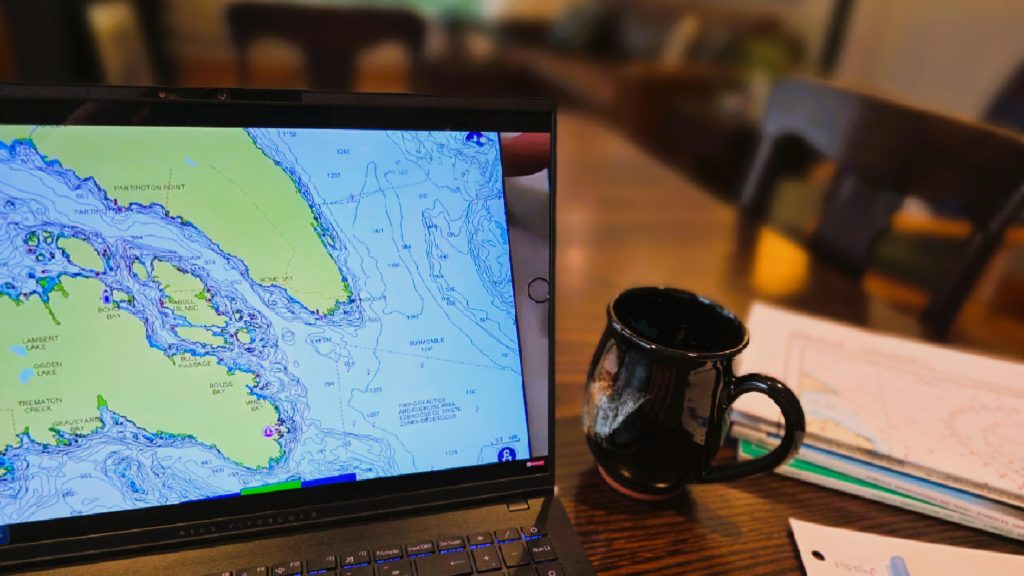
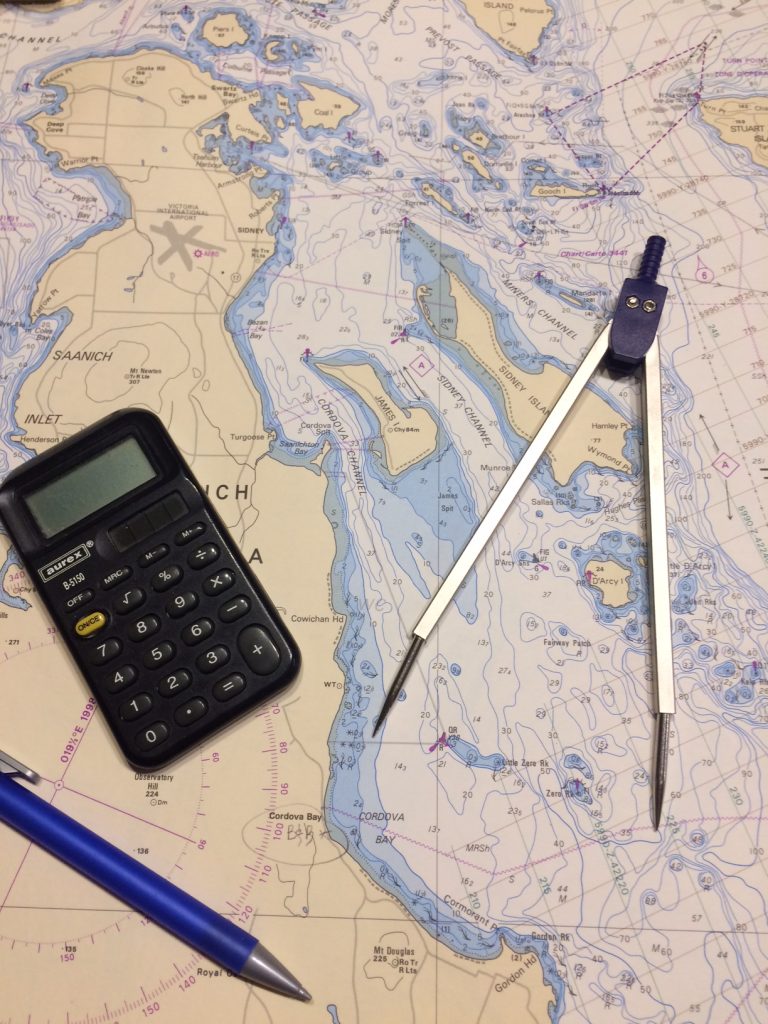
This program focuses on improving your knowledge, understanding, and skills in navigation and boat safety topics. We cover the fundamentals of traditional navigation – understanding global coordinates, using a magnetic compass, and planning a cruise using paper charts.
Boat handling topics include operator and crew responsibilities, managing onboard emergencies, collision-avoidance rules, anchoring and docking/undocking techniques, and understanding marine weather forecasts and tide/current tables.
Included will be navigation practice exercises, course notes, and a final exam, which, if you complete with 75% or higher, may lower your boat insurance.
Learn the fundamentals of traditional and electronic navigation, including navigation using paper charts and electronic devices (e.g., a chart plotter and app-based software).
Each section includes course notes, which can be downloaded electronically or printed in booklet format; instructional videos; skill-testing quizzes and practice exercises; and links to supplementary resources, including web-based resources and videos related to each topic.
Participants must complete the cruise exercises with a chart plotter or tablet/phone navigation app. The course provides options for purchasing apps starting at $14.00.
The course, which can be taken online or in a classroom (where available), is 8 to 9 weeks in length (at the discretion of the instructor team). This content is the 2nd half of the Basic Navigation & Boat Handling course.)
Learn the fundamentals of boat handling and safety techniques, including skipper and crew responsibilities, preparing for departure, handling emergencies, anchoring techniques, lines and knots, docking and undocking techniques, marine weather, collision avoidance rules, and tide and current tables.
Each section includes course notes, which can be downloaded electronically or printed in booklet format, instructional videos, skill-testing quizzes and practice exercises, and links to supplementary resources, including web-based links and videos related to each topic.
The course, which can be taken online/virtual or in a classroom (where available), is 7 to 8 weeks in length (at the discretion of the instructor team). A final exam is also available. (This content is the first half of the Basic Navigation & Boat Handling course)
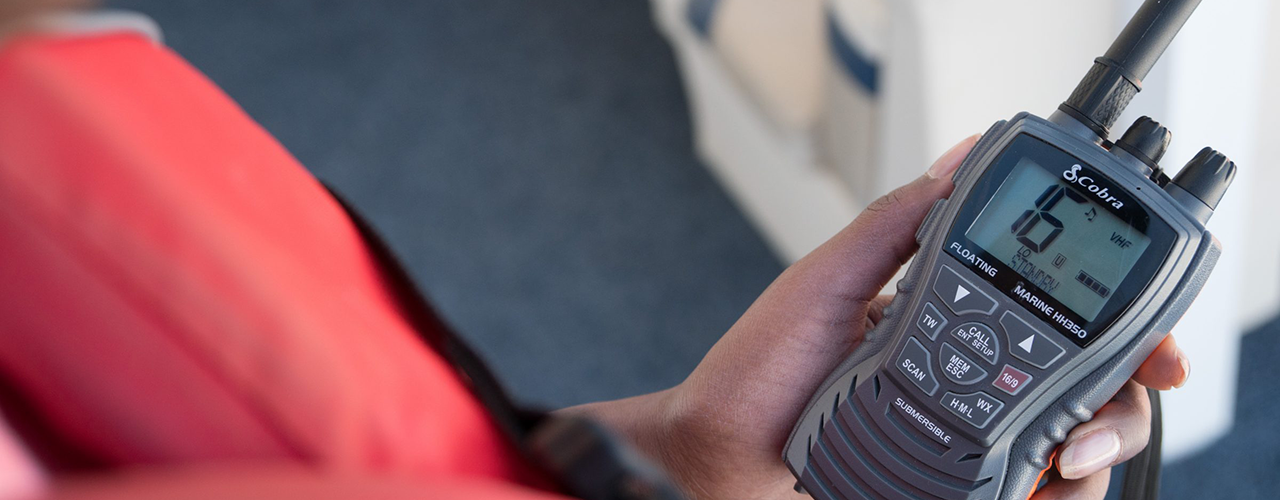
Secure your lifeline. Be sure that you and your family take the Maritime Radio course.
In this classroom session, Maritime Radio reviews the course materials the student has studied prior to the session.
Material includes: emergency radio procedures and everyday operating techniques. The uses of marine radios, choice of frequencies, operation, phonetic alphabet, procedural words and phrases, as well as Digital Selective Calling and the Global Maritime Distress and Safety System (DSC/GMDSS).
All mariners, including recreational boaters, will want to take advantage of the many features and capabilities of this innovative form “automatic” radio.
You will be well prepared for the Restricted Operator Certificate (Maritime) with DSC Endorsement exam, which is completed at the end of the session.
This course is designed as a self-study program – the learner is responsible for setting their own pace in completing the material.
There is a course schedule to guide participants. Support/assistance is available through an online “student forum” where participants can direct written questions to the instructor team. The response standard for questions is < 24 hours.
Work at your own pace. Please contact Charles Hawkswell at 250 334 0225 or capelazocps@live.ca for questions or concerns. All the best, and thank you for taking the steps to be safe and knowledgeable out on the water!
Coming soon – mini courses!
2 to 4 hours long online/self-study sessions covering: Aids to Navigation, Anchoring with assurance, Avoiding collisions (collision regulations), Boating in tidal waters, Docking with confidence, Knots & lines, Weather for boaters
Stay up to date on what’s happening with CanBoat Cape Lazo. Learn about upcoming courses, meetings and other events!